
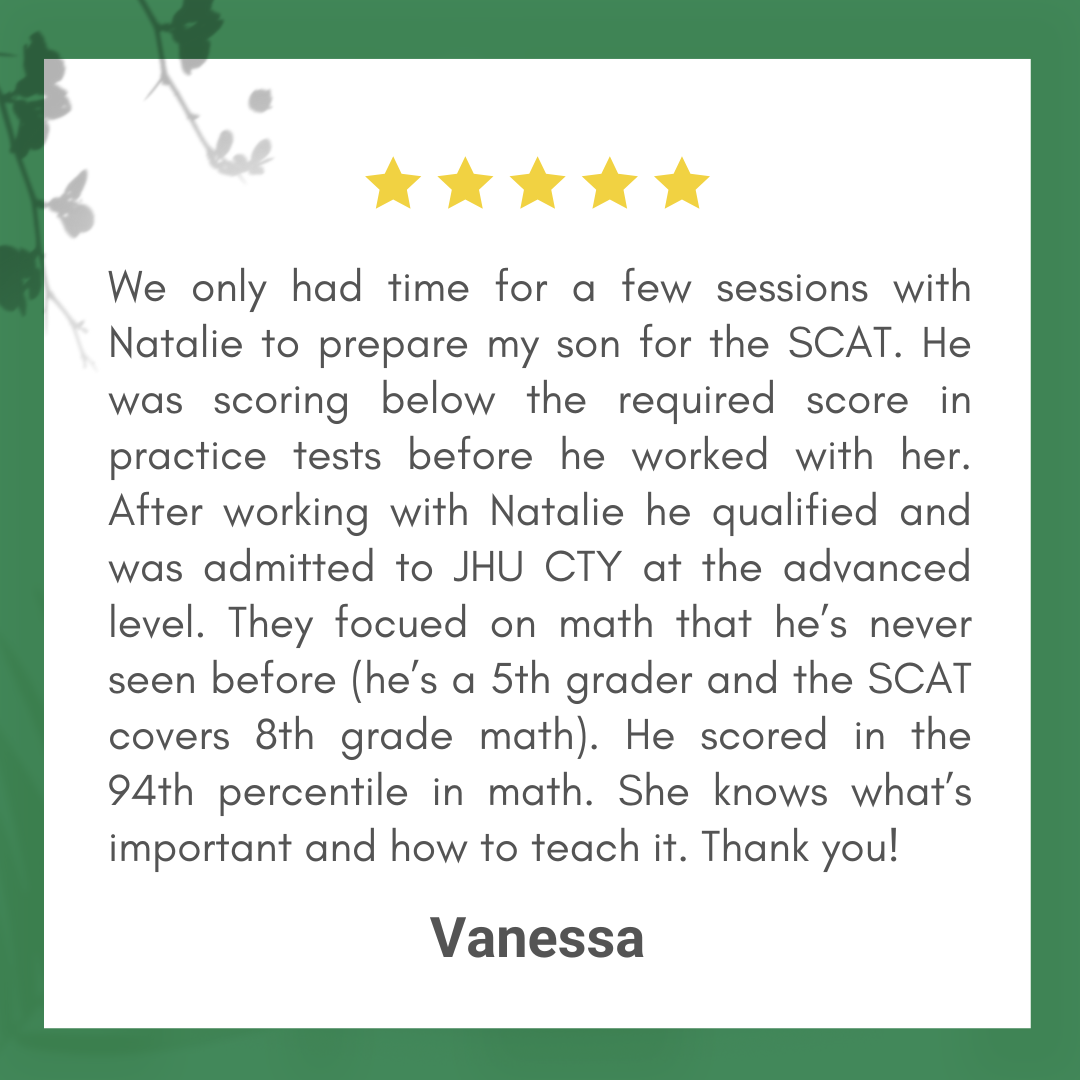
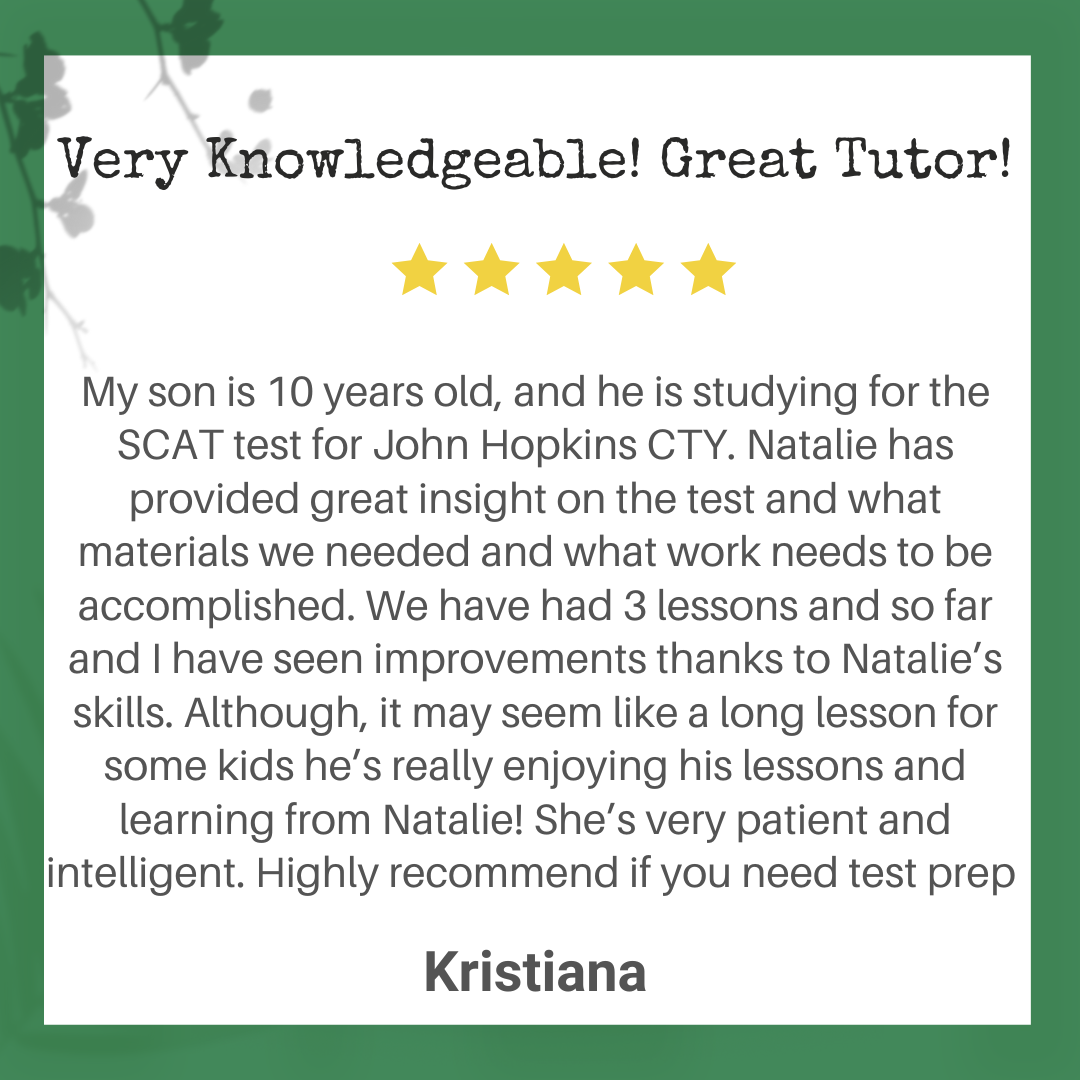
Natalie’s SCAT tutoring includes complete test preparation for both sections in the Elementary (grades 2-3), Intermediate (grades 4-5) and Advanced (grades 6+) levels of the SCAT. The SCAT is a unique test designed by CTY (John Hopkins Center for Talented Youth). Students in grades 2-12 can take the 40-minute test to get into advanced online programs. It has 2 sections, verbal and quantitative, and each section is 50 questions long with a 20-minute time limit. Natalie’s students score in the top percentiles so they can pass the test or achieve High/Grand Honors status, based on their goals.

Verbal prep
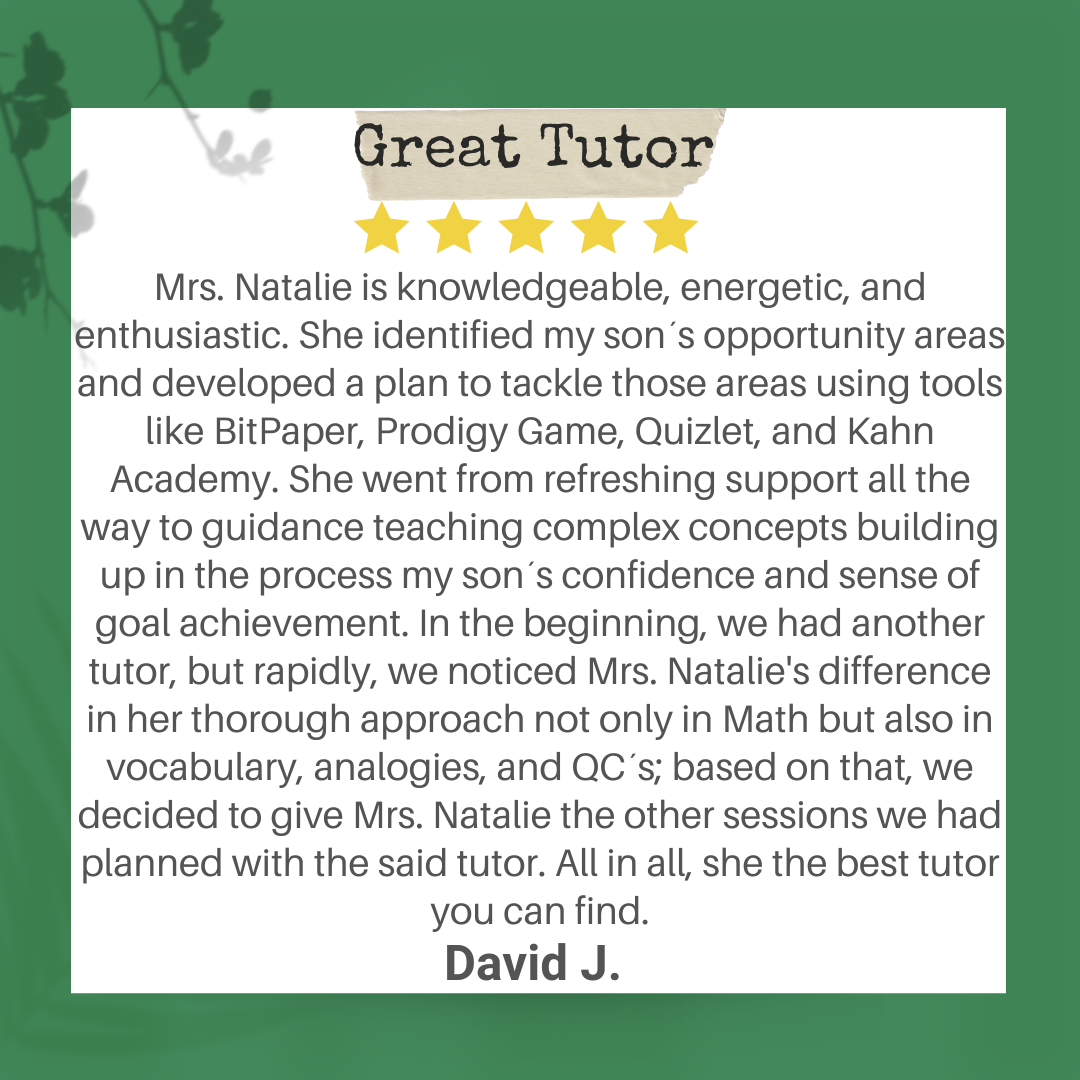
Analogies, a unique question type, and vocabulary knowledge from higher grade levels make this section incredibly challenging. Students work through practice questions while they learn the best strategies and approaches for mastering this test section. Natalie also helps them focus on good time management. For younger students, this includes analogy word games and other skill-building activities.

Quantitative prep
Natalie teaches effective techniques and strategies for solving quantitative comparison (QC) questions. With her help, students boost their time management and scores after working through concept review and targeted practice. They do regular problem-solving and any needed concept review to become familiar with the format of QCs and test expectations.
Tutoring includes:
Complete review of SCAT concepts with targeted practice
Interactive math and verbal practice questions
Weekly feedback on student progress and homework completion
Timed practice sets (all levels) and mock practice tests (Advanced level only)
FAQ about Natalie’s test prep
Do you offer a full test prep program or classes?
I offer one-on-one lessons, not classes, where my tutoring adapts to the needs of every student. I guide students through their test prep with targeted concept review, strategies, and time management techniques. I do not have a one-size-fits-all approach or set curriculum for everyone to follow.
What does a typical lesson with you look like?
Test preparation is a combination of concept review and test-taking strategies. I help my students not just get to the right answer, but also understand how they got to the right answer and what makes it correct. They also learn how to methodically approach questions and answers. A typical lesson for a reading comprehension test section would be working through a number of passages with test-specific questions, for example, or for math test sections, working through practice questions and any needed concept review for those questions at the same time. A good amount of lesson time is spent on mastering strategies and building good time management skills. By understanding how a test works and how the testmakers have created the questions, students better learn how to take that test with minimal stress and maximum success.
Can you guarantee a score increase on the actual test?
Successful test prep depends entirely on a student’s commitment to a study plan, daily practice, and application of strategies and techniques learned during lessons. I personally cannot promise that any student will definitely raise scores just because of my tutoring. However, students who practiced diligently and listened to my advice during lessons — and applied it — did in fact raise their scores significantly.
How many lessons will my child need?
Some students need more support, while others need less. Guessing how many lessons a student needs requires more information. To start, I always ask for practice test results or previous test results to help me see where we need to focus our efforts the most. I also ask about what test prep, if any, you have done so far, and what your specific test score goals are. Your test preparation should start as early as possible before a test date. If your child has any struggles or gaps in a specific subject area, like math, reading or vocabulary, then they will most likely need more tutoring than the average student.





SCAT Test Prep 101
Get a detailed overview of the SCAT test, including its breakdown, time limit, concepts, and unique question types.
Keep reading

Interested in tutoring or have questions?


 Natalie G. Private Tutoring